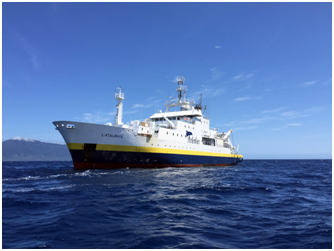
TONGA is a international multidisciplinary project dedicated to the study of the control of ocean productivity and carbon export driven by micronutrients from hydrothermal origin. It is based both on a 37-day oceanographic cruise in the Western Tropical South Pacific and modelling work and involves hydrothermal geochemists, physical oceanographers, trace element chemists (ocean and atmosphere), biogeochemists, biologists and modelers.
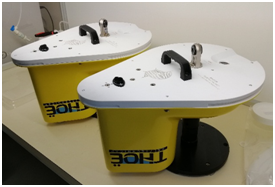
TONGA is a multidisciplinary project dedicated to the study of the control of ocean productivity and carbon export driven by micronutrients from hydrothermal origin. It is based both on a 37-day oceanographic cruise in the Western Tropical South Pacific and modelling work and involves hydrothermal geochemists, physical oceanographers, trace element chemists (ocean and atmosphere), biogeochemists, biologists and modelers.
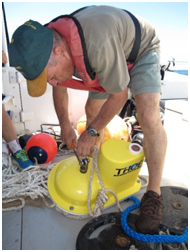
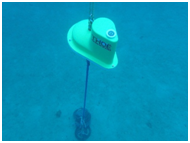
During the oceanographic cruise two THOË samplers were deployed on mooring lines to determine dissolved elements, including manganese and mercury. Samplers will remain in place for one year and each DGT will be exposed for a one-month period. For further information on the project please click on the link: (https://www.mio.osupytheas.fr/fr/mers-et-oceans-changement-global/tonga-productivite-oceanique-et-exportation-du-carbone)
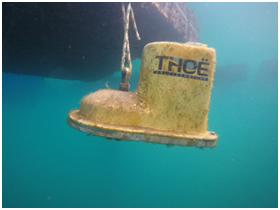
Shipping activities have the potential to release undesirable chemicals into the environment. Chronic exposure to these chemicals may result in deleterious effects occurring on the surrounding ecosystems. Passive sampling using the DGT technique allows time averaged concentrations to be determined providing perhaps a more representative data of the condition’s organism are exposed to.
THOE samplerswere used to investigate the fluctuations in dissolved metals a port. Each DGT device was exposed for a three-day period. During each DGT exposure period one grab sample was collected.
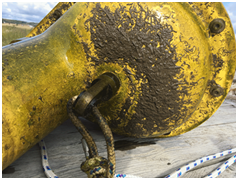
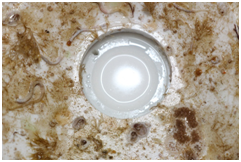 Despite the development of heavy biofouling on the shell of the THOË sampler during the month-long deployment period, the DGT exposure window remained free from any biological fouling. After retrieval of the sampler dissolved metal concentrations were determined by eluting the DGT devices and analyzed using an ICP-MS. Continuous monitoring of dissolved copper concentrations using the THOË sampler show oncentrations remained relatively constantduring the first 18 days followed by increased concentrations over the next 9 days and finally dropping back down during the last 3 days. Comparatively, results obtained by grab samples were more variable, thus demonstrating the differentwhen collecting few grab samples when interpreting data.
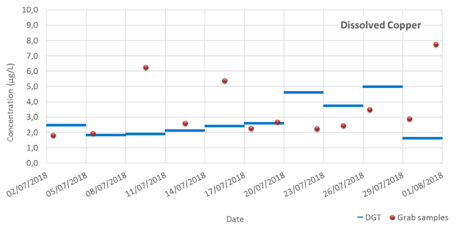
Dissolved copper
concentrations obtained using
a THOË sampler and by
classical grab sample collection
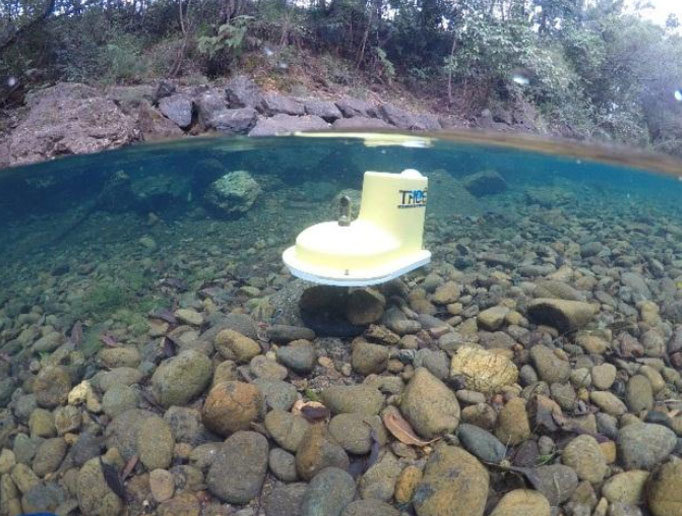
New Caledonia’s ores are not only rich in Nickel but also contain a wealth of other elements including chromium. While chromium is not currently exploited, historical exploitation combined present day mining for nickel ores causes the release of chromium into creeks and rivers. Under oxic conditions the toxic hexavalent formexists and potentially presents a public health problemif not monitored correctly.
Over the last few years DGT Research has developed a new DGT device containing a binding layer specifically designed to retain hexavalent chromium.
Using this new DGT in our THOË sampler provides a perfect solution at remote monitoring sites.
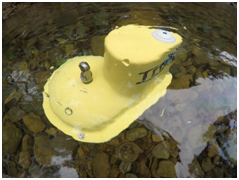 New Caledonia’s ores are not only rich in Nickel but also contain a wealth of other elements including chromium. While chromium is not currently exploited, historical exploitation combined present day mining for nickel ores causes the release of chromium into creeks and rivers. Under oxic conditions the toxic hexavalent form exists and potentially presents a public health problem if not monitored correctly.
Over the last few years DGT Research has developed a new DGT device containing a binding layer specifically designed to retain hexavalent chromium. Combing this new DGT with our THOË sampler provides a perfect solution at remote monitoring sites.
When determining hexavalent chromium in natural waters, the time between sampling and analysis is a critical factor in ensuring accurate determination of hexavalent chromium concentrations. Using our THOË water sampler with DGT devices, design to retain hexavalent Chromium, we demonstrated that THOË is a simple and reliable alternative to grab sampling. Samples are filtered and stabilized using the DGT technology and exposed and isolated at preprogrammed intervals using the THOË sampler.
An eleven-day study was conducted to compare hexavalent chromium concentrations obtained using DGT devices installed in the THOË sampler with classical analytical analysis performed on grab samples.
Results between the different sampling and analytical techniques were very similar, with the THOË sampler perfectly preserving the hexavalent chromium concentrations over the deployment period.
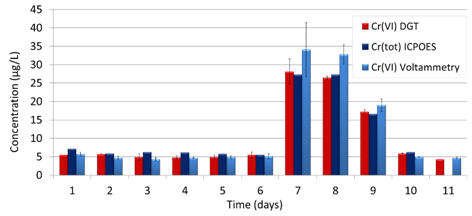
Monitoring hexavalent
chromium in a local river
using a THOË sampler
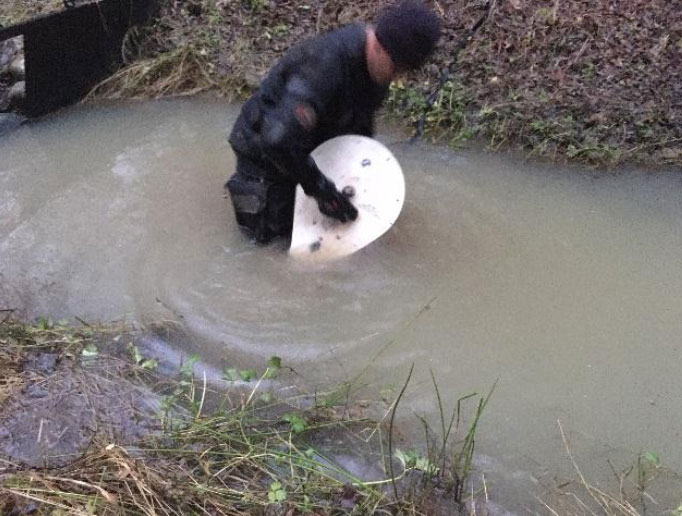
Agricultural activities have the potential to increase dramatically the concentrations of nutrients into water courses.
A recent study by Luode Consulting demonstrated the importance of continuous monitoring of phosphate concentrations using our THOË sampler containing DGT devices with an iron oxide binding layer (LSNP-NP) in a small creek downstream of farmland.
The THOË automatic sampler was programmed to exposed DGT devices over twelve 24-hour periods. To demonstrate this innovative technique provided an improvement over traditional sampling, several spot samples were collected and analyzed using classical colorimetric determination by CFA (Continuous Flow Analysis).
THOË’s integrated temperature logger was used to record water temperatures over the study period (0.2-6.5°C) to allow accurate determination of the daily dissolved phosphate concentrations.
During the study period the THOË autosampler permitted the identification of a severe pollution event with phosphates concentrations reaching over 10 times the lowest values recorded. The pollution event was traced back to a manure being cleaned out of a cow house.
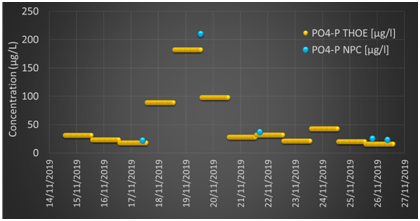
Daily phosphate concentrations
determined in a small creek using
a THOË sampler